Yvaga Station
 Available On: itch.io
Released: 13/05/2020
Role: Programmer, Producer & Team Lead
Available On: itch.io
Released: 13/05/2020
Role: Programmer, Producer & Team Lead
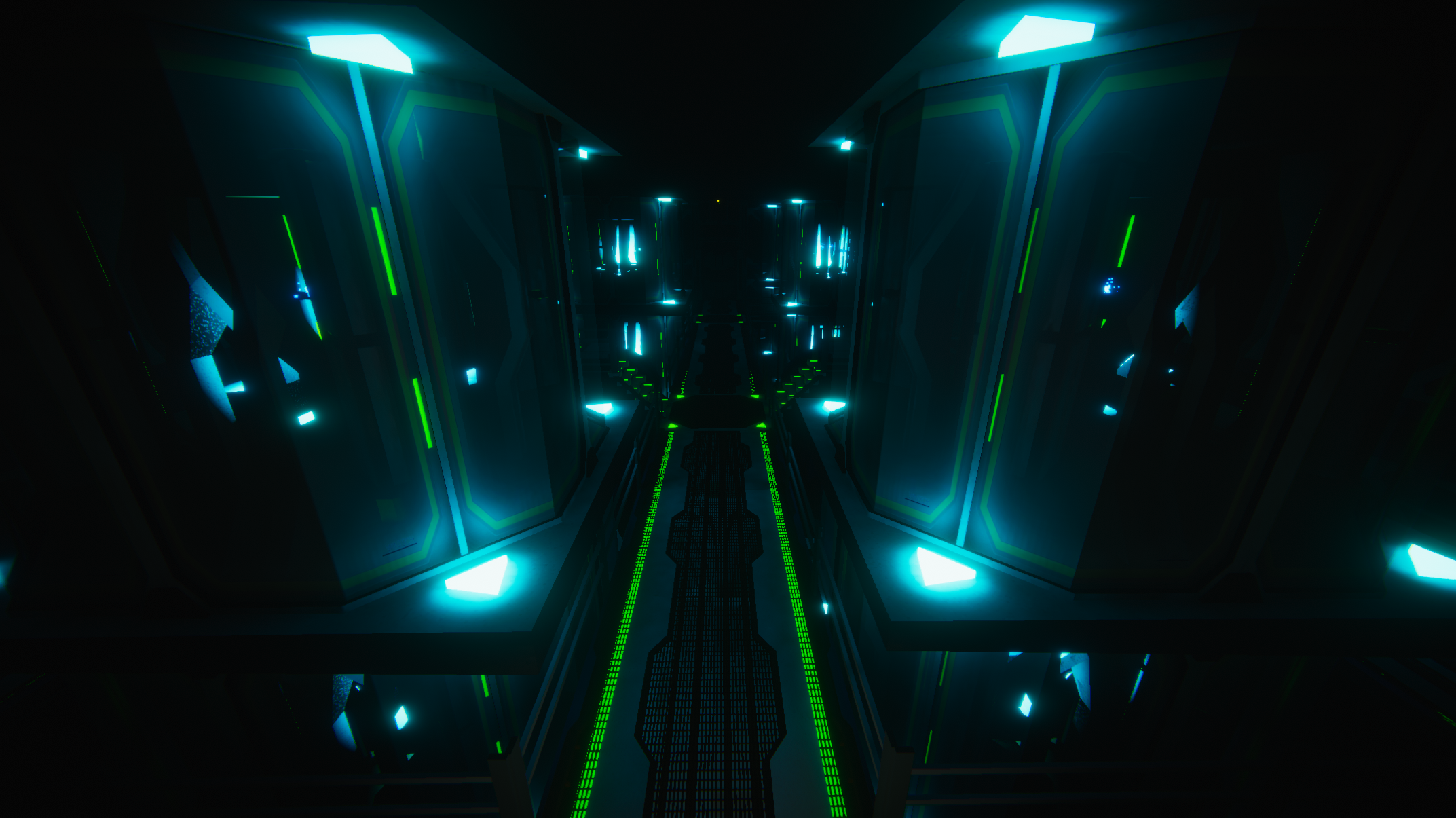
Watch the shadows, watch your ammo, and watch each other. Something is out there, and its coming for you. In the first game from indie studio Glass Nomad, you and a squad of your friends will be pitched against an opponent who is not only fast, stealthy, and a lethal hunter, but is also controlled by another player.
This was my first development project with the Glass Nomad Games team. We took a lot of inspiration from classic horror sci-fi like Alien and really aimed to create a tense, suspenseful atmosphere for the game.
We made extensive use of asset packs through the six month development cycle, as we had no art department for this project. This lead to outsourcing a key art asset, the marine player character model, to an external artist as we couldn’t make do with freely available assets. This was due to being unable to find anything appropriate, as well it being an asset the player would be looking at a lot due to the game being multiplayer.
I made extensive use of a physical journal to help track priorities and tasks for future sprints, as well as keeping relevant notes. This included any blockers that had been brought up, expected timelines for tasks, as well as any other notes or leads that needed to be followed up, like if someone had missed a daily stand up.
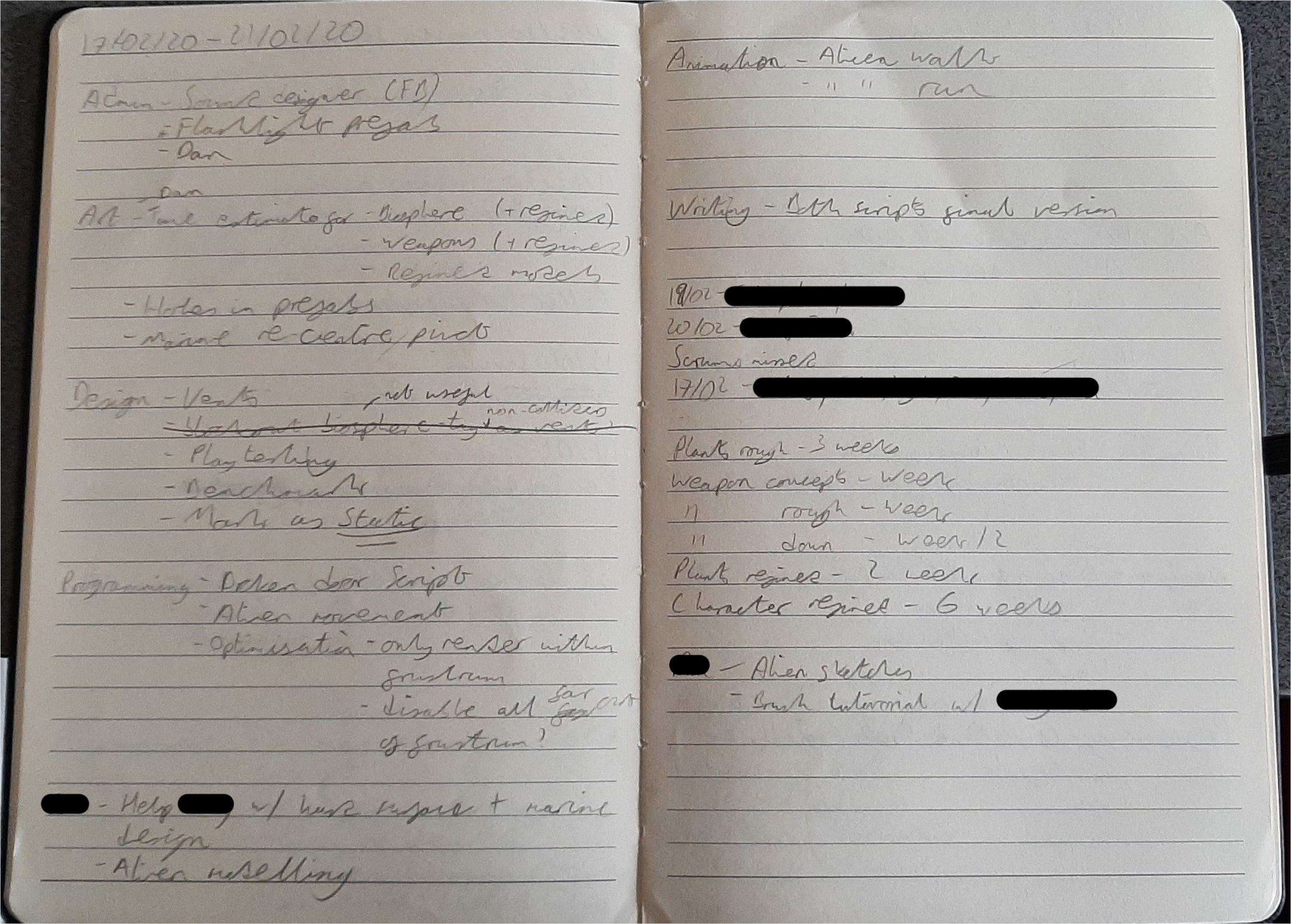
This was then used to help produce relevant and realistic Trello task cards for the next sprint, as well as to aid with longer term planning of when specific features would be complete. At this stage of my career this was all stored informally either in my head or notebook, a practice which caused a lack of transparency within the team and created a single point of failure - if I was unable to do sprint planning while someone else could put together a sensible sprint they didn’t have access to all the information needed to make sure nothing important was missed.
To help alleviate this lack of transparency and single point of failure we made use of the MuSCoW Prioritisation method to organise our backlog. Using this, we organised our backlog into four categories; must-have, should-have, could-have, and won’t-have. This allowed anyone to easily see what in the backlog was a priority, and allowed sprint planning to be done faster and to be more focused towards a shared vision of the end product.
We then utilised task labels to group these tasks by discipline, allowing everyone to easily see priorities for their area, without the obfuscation and lack of clarity that comes with separating different disciplines tasks onto different boards.
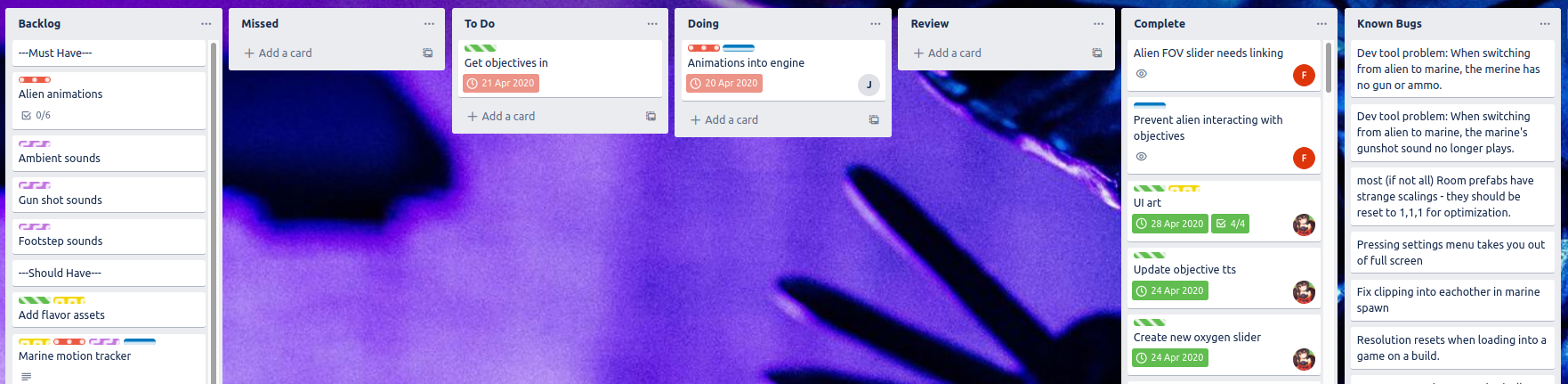
Learning from this project, we continued to make use of Trello for our next project, although most recently have transferred to Jira due to the expanded capabilities, tool set, and added features such as Confluence integration, release planning and story points. We have also continued to make consistent use of task labels, finding them a huge boon in increasing board readability, without sacrificing a developers awareness of what the rest of the team are working on, especially in other departments. We have also made the switch over to using user stories rather than tasks, as we’ve found this provides greater context for the work being done, and prioritises implementing full game features, rather than abstract parts or mechanics.